
Logomark

Angie Li

Increase feedback for call agents

How might we increase the frequency and quality of feedback to agents?
An illustrative sketch of a flower

The problem

How might we empower our agents to give the best customer experience with the power of AI?


Call agents are used to clunky outdated, and disconnected systems. Providing them with a unified tool helps agents focus on the customer. When customers called in with complex questions, agents aren’t able to “Google it” due to security risks and contractual obligations with our clients. Using a combination of ChatGPT and custom data science models, we can help our agents serve our customers more effectively.

Hypothesis: Agents have created workarounds and hacks to make the most of legacy tools. Empowering them with a sleek design and AI-driven support will improve productivity leading to more sales.

Product goals

The second paragraph of an article is sometimes called the “nut graph,” which is short for “nutshell paragraph.” That’s because this is usually where the article gets to the heart of the matter—the main point. After the first section, the reader is ready to hear what’s truly at stake in this piece of writing. They’re invested. They’re paying attention. If your piece is long enough to have long, multi-paragraph sections, then you’ll want to use this strategy throughout to make sure you’re holding reader attention in a consistent way.

Success metrics

The second paragraph of an article is sometimes called the “nut graph,” which is short for “nutshell paragraph.” That’s because this is usually where the article gets to the heart of the matter—the main point. After the first section, the reader is ready to hear what’s truly at stake in this piece of writing. They’re invested. They’re paying attention. If your piece is long enough to have long, multi-paragraph sections, then you’ll want to use this strategy throughout to make sure you’re holding reader attention in a consistent way.

My role

I was the lead designer for this feature. I partnered closely with the lead designers of the entire workspace to make sure that the designs were cohesive with the larger environment. I was responsible for the overall design direction of the project.

Arriving at the proposed solution

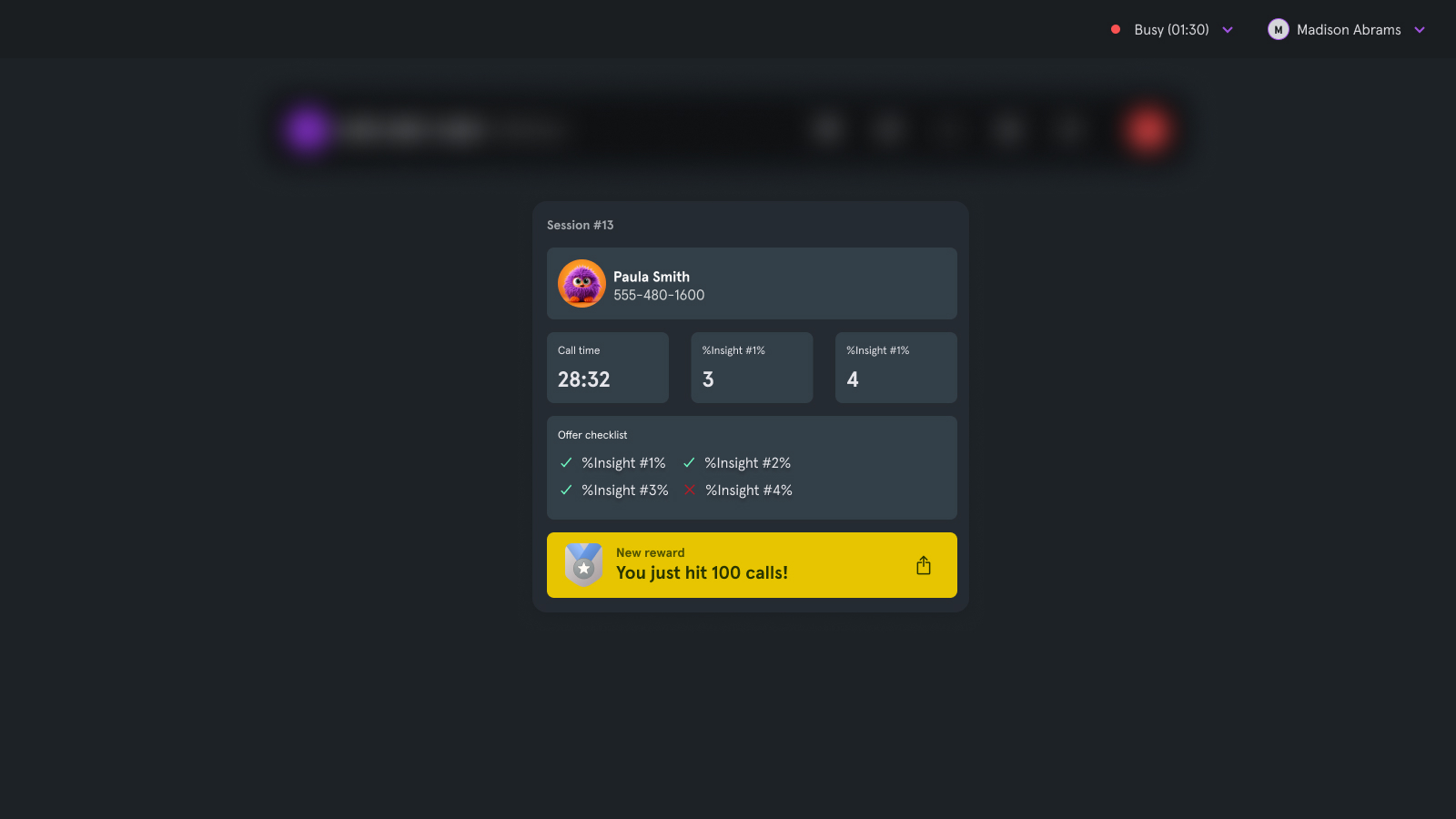
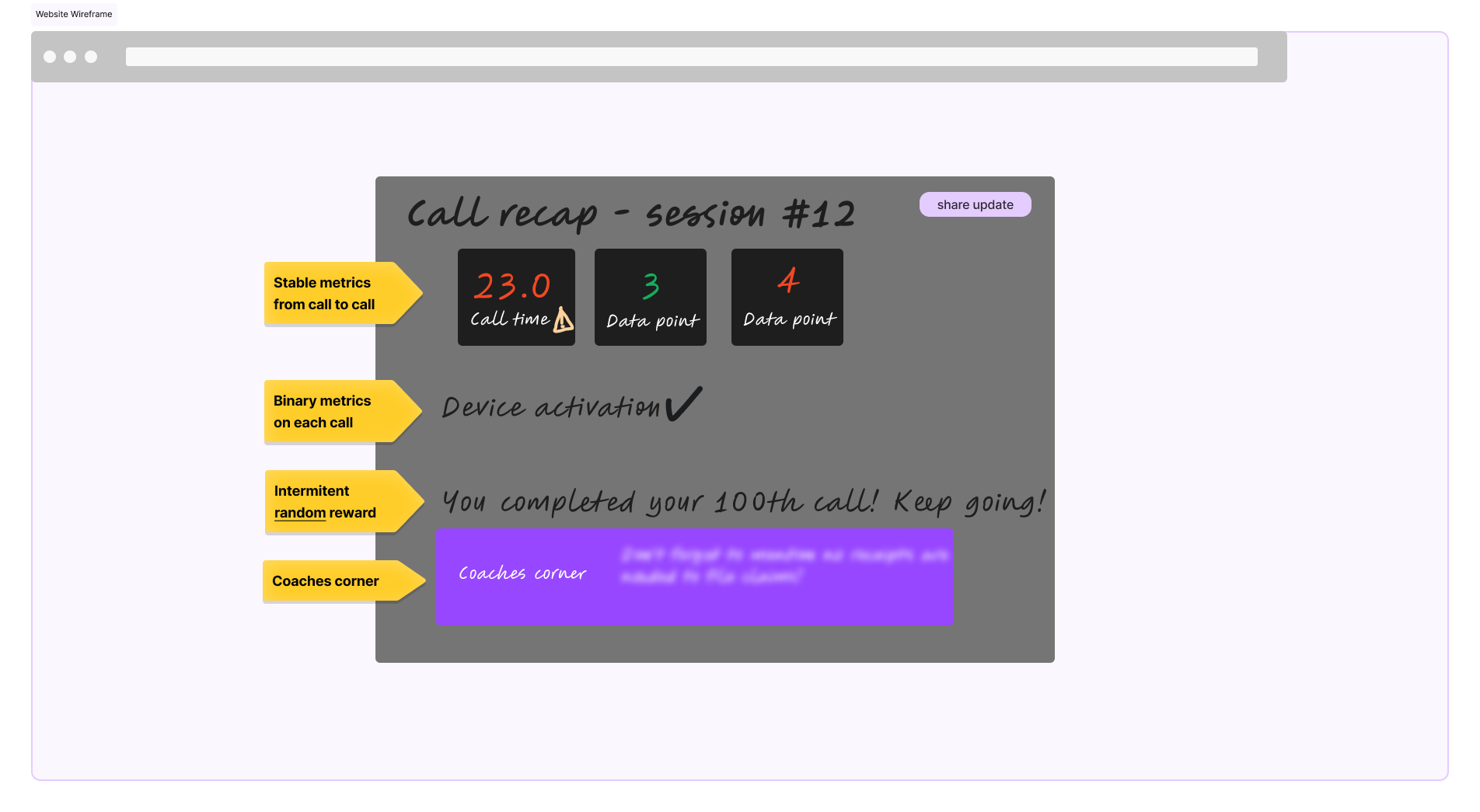
Our team leveraged Fullstory and Mixpanel data to understand how our agents currently interacted with the call flow. Call center on-site research with agents provide insights on the state-of-mind and environment agents work in. There is very little down time when an agent isn’t on a call supporting a customer. That said, it made sense to provide feedback immediately after a call.
An illustrative sketch of a flower

Challenges and other solutions explored

Call agents complete documentation after each call. This design is built for a future where we can rely on accurate data science models to help automate call documentation. We also considered in-the-moment feedback for agents, but feel concern about being too vocal and disruptive with our agents when they are focused on helping the customer.

My design philosophy

I’m an experienced lecturer and passionate educator. I have taught UX training courses with Nielsen Norman Group from cities across the U.S. and U.K. I specialize in information architecture and web usability. I currently lead UX research and design at Group 1001.

Logomark

Angie Li

Increase feedback for call agents

How might we increase the frequency and quality of feedback to agents?

An illustrative sketch of a flower

The problem

How might we empower our agents to give the best customer experience with the power of AI?


Call agents are used to clunky outdated, and disconnected systems. Providing them with a unified tool helps agents focus on the customer. When customers called in with complex questions, agents aren’t able to “Google it” due to security risks and contractual obligations with our clients. Using a combination of ChatGPT and custom data science models, we can help our agents serve our customers more effectively.

Hypothesis: Agents have created workarounds and hacks to make the most of legacy tools. Empowering them with a sleek design and AI-driven support will improve productivity leading to more sales.

Product goals

The second paragraph of an article is sometimes called the “nut graph,” which is short for “nutshell paragraph.” That’s because this is usually where the article gets to the heart of the matter—the main point. After the first section, the reader is ready to hear what’s truly at stake in this piece of writing. They’re invested. They’re paying attention. If your piece is long enough to have long, multi-paragraph sections, then you’ll want to use this strategy throughout to make sure you’re holding reader attention in a consistent way.

Success metrics

The second paragraph of an article is sometimes called the “nut graph,” which is short for “nutshell paragraph.” That’s because this is usually where the article gets to the heart of the matter—the main point. After the first section, the reader is ready to hear what’s truly at stake in this piece of writing. They’re invested. They’re paying attention. If your piece is long enough to have long, multi-paragraph sections, then you’ll want to use this strategy throughout to make sure you’re holding reader attention in a consistent way.

My role

I was the lead designer for this feature. I partnered closely with the lead designers of the entire workspace to make sure that the designs were cohesive with the larger environment. I was responsible for the overall design direction of the project.

Arriving at the proposed solution

Our team leveraged Fullstory and Mixpanel data to understand how our agents currently interacted with the call flow. Call center on-site research with agents provide insights on the state-of-mind and environment agents work in. There is very little down time when an agent isn’t on a call supporting a customer. That said, it made sense to provide feedback immediately after a call.

An illustrative sketch of a flower

Challenges and other solutions explored

Call agents complete documentation after each call. This design is built for a future where we can rely on accurate data science models to help automate call documentation. We also considered in-the-moment feedback for agents, but feel concern about being too vocal and disruptive with our agents when they are focused on helping the customer.

My design philosophy

I’m an experienced lecturer and passionate educator. I have taught UX training courses with Nielsen Norman Group from cities across the U.S. and U.K. I specialize in information architecture and web usability. I currently lead UX research and design at Group 1001.

Logomark

Angie Li

Increase feedback for call agents

How might we increase the frequency and quality of feedback to agents?

An illustrative sketch of a flower

The problem

Call agents have regular sessions with their managers to go over performance and growth opportunities. While regular touch points are valuable, there’s some feedback should be more frequent. Our team designed a way to surface insights after every call interaction.

Product goals

  • Increased the volume of personalized feedback
  • Help agents learn how to improve in their next calls as soon as possible
  • Reinforce good behaviors – including rewards/gamification

Success metrics

  • Tool usage (time and click-events)
  • Reduce call time
  • Sales performance
  • Shares (engagement)

My role

I was the lead designer for this feature. I partnered closely with the lead designers of the entire workspace to make sure that the designs were cohesive with the larger environment. I was responsible for the overall design direction of the project.

Arriving at the proposed solution

Our team leveraged Fullstory and Mixpanel data to understand how our agents currently interacted with the call flow. Call center on-site research with agents provide insights on the state-of-mind and environment agents work in. There is very little down time when an agent isn’t on a call supporting a customer. That said, it made sense to provide feedback immediately after a call.

An illustrative sketch of a flower

Challenges and other solutions explored

Call agents complete documentation after each call. This design is built for a future where we can rely on accurate data science models to help automate call documentation. We also considered in-the-moment feedback for agents, but feel concern about being too vocal and disruptive with our agents when they are focused on helping the customer.