
Logomark

Angie Li

increase customer support speed with chatgpt

How might we empower our agents to give the best customer experience with the power of AI?
An illustrative sketch of a flower

The problem

How might we empower our agents to give the best customer experience with the power of AI?


Call agents are used to clunky outdated, and disconnected systems. Providing them with a unified tool helps agents focus on the customer. When customers called in with complex questions, agents aren’t able to “Google it” due to security risks and contractual obligations with our clients. Using a combination of ChatGPT and custom data science models, we can help our agents serve our customers more effectively.

Hypothesis: Agents have created workarounds and hacks to make the most of legacy tools. Empowering them with a sleek design and AI-driven support will improve productivity leading to more sales.

Product goals

The second paragraph of an article is sometimes called the “nut graph,” which is short for “nutshell paragraph.” That’s because this is usually where the article gets to the heart of the matter—the main point. After the first section, the reader is ready to hear what’s truly at stake in this piece of writing. They’re invested. They’re paying attention. If your piece is long enough to have long, multi-paragraph sections, then you’ll want to use this strategy throughout to make sure you’re holding reader attention in a consistent way.

Success metrics

The second paragraph of an article is sometimes called the “nut graph,” which is short for “nutshell paragraph.” That’s because this is usually where the article gets to the heart of the matter—the main point. After the first section, the reader is ready to hear what’s truly at stake in this piece of writing. They’re invested. They’re paying attention. If your piece is long enough to have long, multi-paragraph sections, then you’ll want to use this strategy throughout to make sure you’re holding reader attention in a consistent way.

My role

I was the Senior Product Design manager for the workspace. I supported this team from the beginning of the project in mid-2023. The domain is comprised of engineers, product leads, and data science. I was responsible for leading research on the workspace and determine the overall design direction of the project.


Arriving at the proposed solution

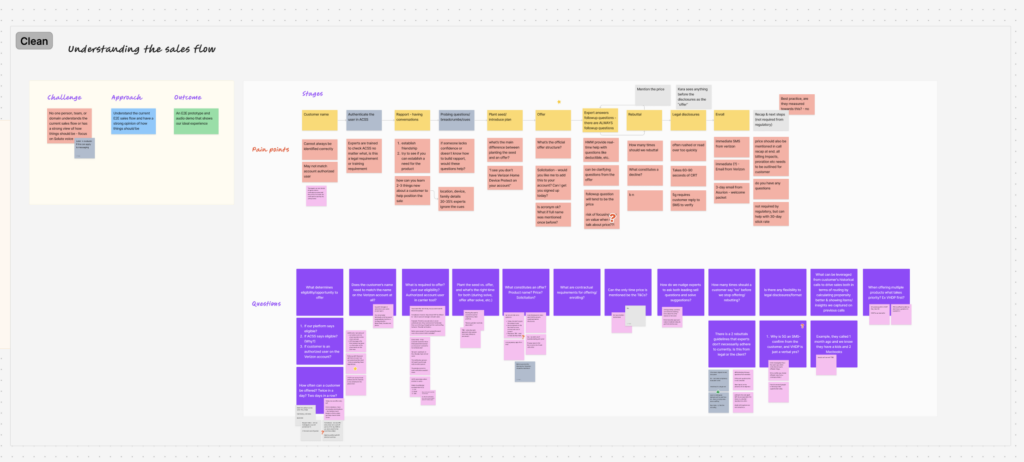
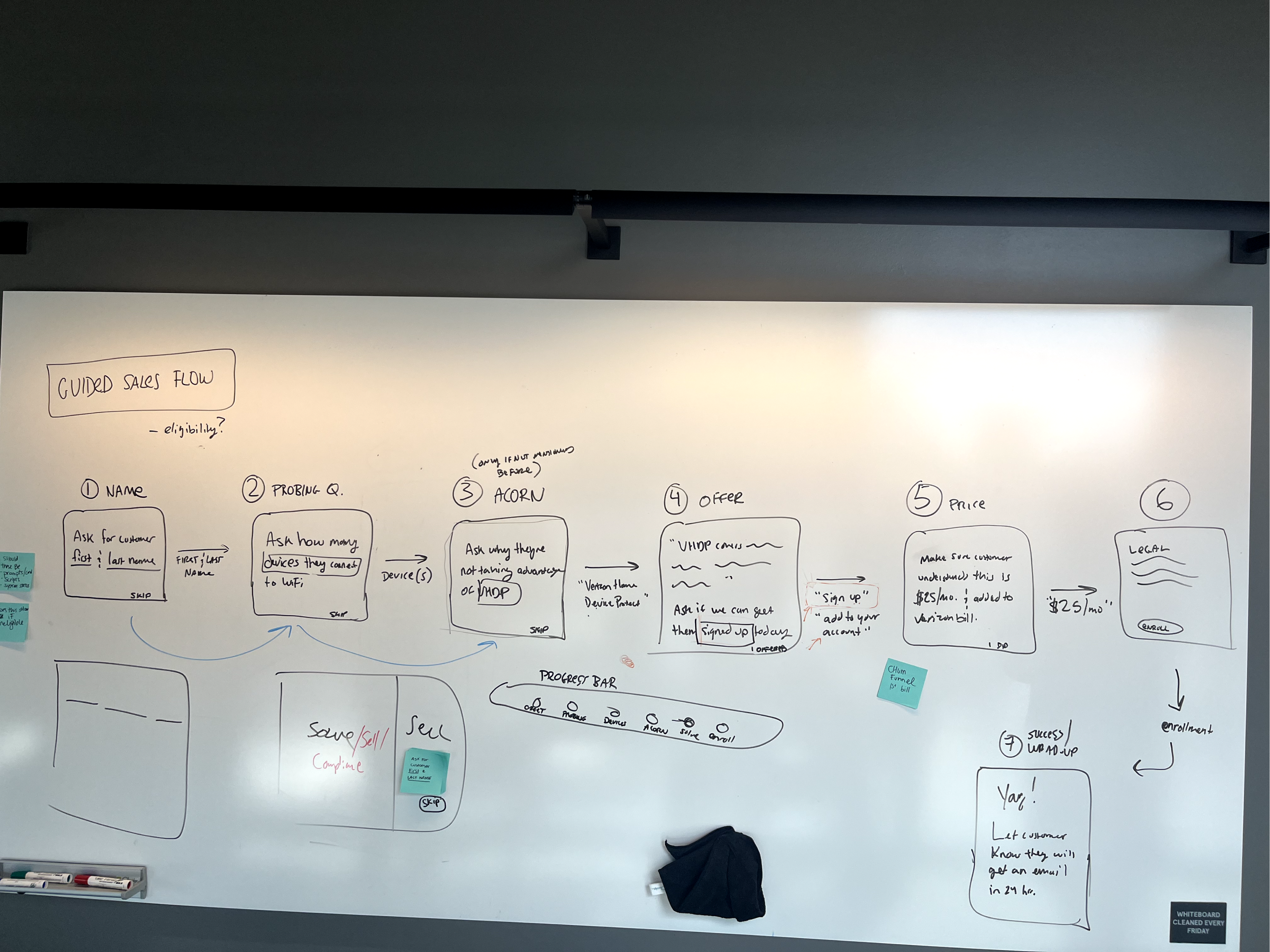
The initial discovery interviews showed us that many of the legacy agent tools did not work as expected. I made several research trips to sit alongside our call agents and understand their needs. We received rave feedback from early prototypes and continue to iterate and evolve the design.
An illustrative sketch of a flower

Results

The second paragraph of an article is sometimes called the “nut graph,” which is short for “nutshell paragraph.” That’s because this is usually where the article gets to the heart of the matter—the main point. After the first section, the reader is ready to hear what’s truly at stake in this piece of writing. They’re invested. They’re paying attention. If your piece is long enough to have long, multi-paragraph sections, then you’ll want to use this strategy throughout to make sure you’re holding reader attention in a consistent way.

Challenges and other solutions explored

Many attempts had been made to build on top of the legacy workspace. This resulted in a very congested and complex UI, and sometimes old experiences were abandoned. Integrating modern data science models in a complex UI didn’t work. Some AI experiments were ignored because it was there was too much look while other AI experiments were not impactful because they were delayed. Thus, the idea was born to build a new system from scratch.

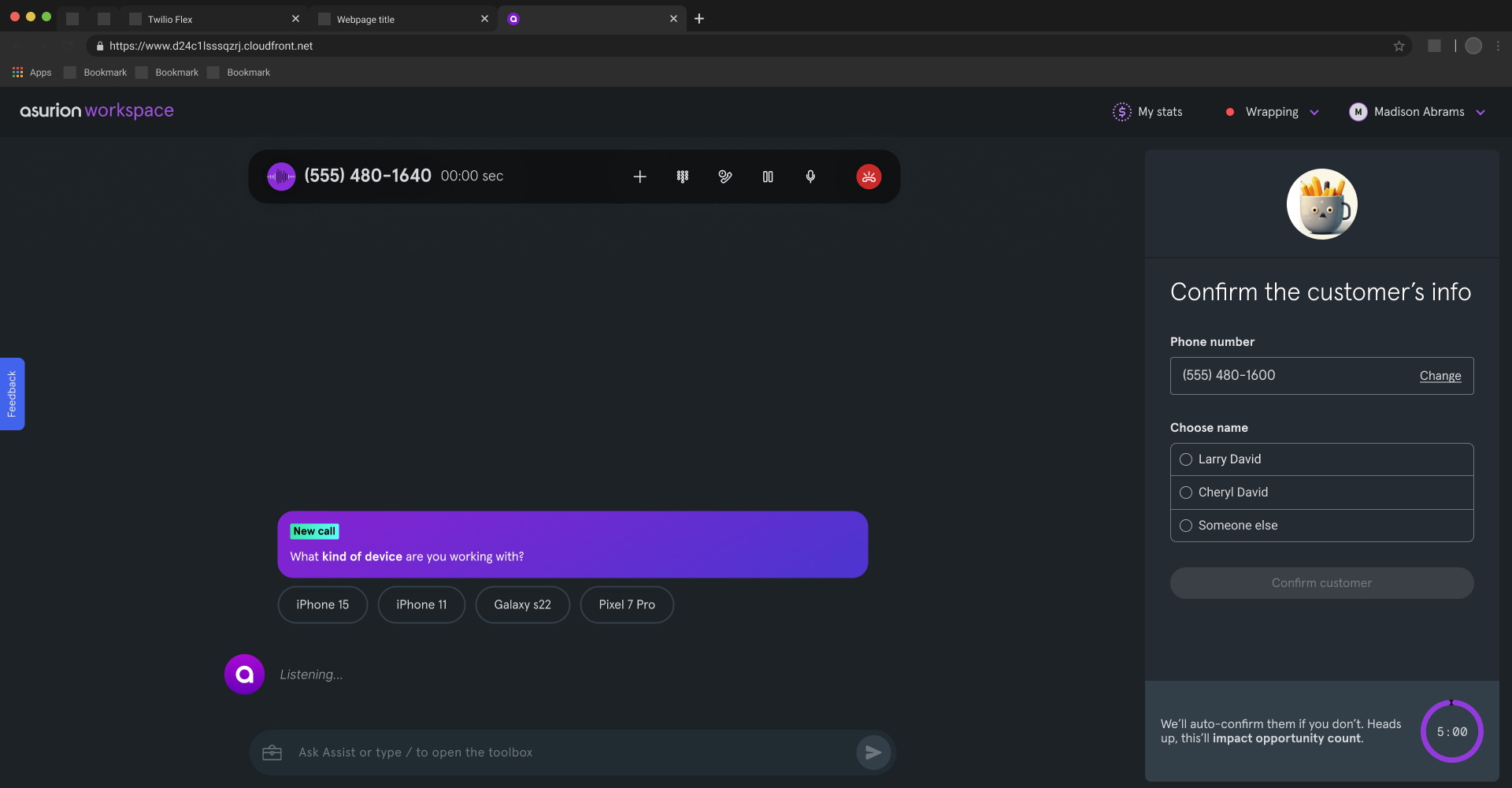
Designing the call bar was particularly challenging. We had to learn how to help a call agent make call transfers and triage for the customer. The workspace continues to be a rewarding design challenge.

My design philosophy

I’m an experienced lecturer and passionate educator. I have taught UX training courses with Nielsen Norman Group from cities across the U.S. and U.K. I specialize in information architecture and web usability. I currently lead UX research and design at Group 1001.

Logomark

Angie Li

increase customer support speed with chatgpt

How might we empower our agents to give the best customer experience with the power of AI?

An illustrative sketch of a flower

The problem

How might we empower our agents to give the best customer experience with the power of AI?


Call agents are used to clunky outdated, and disconnected systems. Providing them with a unified tool helps agents focus on the customer. When customers called in with complex questions, agents aren’t able to “Google it” due to security risks and contractual obligations with our clients. Using a combination of ChatGPT and custom data science models, we can help our agents serve our customers more effectively.

Hypothesis: Agents have created workarounds and hacks to make the most of legacy tools. Empowering them with a sleek design and AI-driven support will improve productivity leading to more sales.

Product goals

The second paragraph of an article is sometimes called the “nut graph,” which is short for “nutshell paragraph.” That’s because this is usually where the article gets to the heart of the matter—the main point. After the first section, the reader is ready to hear what’s truly at stake in this piece of writing. They’re invested. They’re paying attention. If your piece is long enough to have long, multi-paragraph sections, then you’ll want to use this strategy throughout to make sure you’re holding reader attention in a consistent way.

Success metrics

The second paragraph of an article is sometimes called the “nut graph,” which is short for “nutshell paragraph.” That’s because this is usually where the article gets to the heart of the matter—the main point. After the first section, the reader is ready to hear what’s truly at stake in this piece of writing. They’re invested. They’re paying attention. If your piece is long enough to have long, multi-paragraph sections, then you’ll want to use this strategy throughout to make sure you’re holding reader attention in a consistent way.

My role

I was the Senior Product Design manager for the workspace. I supported this team from the beginning of the project in mid-2023. The domain is comprised of engineers, product leads, and data science. I was responsible for leading research on the workspace and determine the overall design direction of the project.


Arriving at the proposed solution

The initial discovery interviews showed us that many of the legacy agent tools did not work as expected. I made several research trips to sit alongside our call agents and understand their needs. We received rave feedback from early prototypes and continue to iterate and evolve the design.

An illustrative sketch of a flower

Results

The second paragraph of an article is sometimes called the “nut graph,” which is short for “nutshell paragraph.” That’s because this is usually where the article gets to the heart of the matter—the main point. After the first section, the reader is ready to hear what’s truly at stake in this piece of writing. They’re invested. They’re paying attention. If your piece is long enough to have long, multi-paragraph sections, then you’ll want to use this strategy throughout to make sure you’re holding reader attention in a consistent way.

Challenges and other solutions explored

Many attempts had been made to build on top of the legacy workspace. This resulted in a very congested and complex UI, and sometimes old experiences were abandoned. Integrating modern data science models in a complex UI didn’t work. Some AI experiments were ignored because it was there was too much look while other AI experiments were not impactful because they were delayed. Thus, the idea was born to build a new system from scratch.

Designing the call bar was particularly challenging. We had to learn how to help a call agent make call transfers and triage for the customer. The workspace continues to be a rewarding design challenge.

My design philosophy

I’m an experienced lecturer and passionate educator. I have taught UX training courses with Nielsen Norman Group from cities across the U.S. and U.K. I specialize in information architecture and web usability. I currently lead UX research and design at Group 1001.

Logomark

Angie Li

increase customer support speed with chatgpt

How might we empower our agents to give the best customer experience with the power of AI?

An illustrative sketch of a flower

The problem

Call agents use outdated and disconnected systems. Providing agents with a centralized tool helps agents focus on the customer. Further, if acustomer calls in with a complex tech support question, agents aren’t able to “Google it” due to security risks and contractual limitations. Historically, agents use our knowledge base to answer tech support questions but it isn’t very searchable or robust. In times of need, our agents may even request that a manager use a personal device to perform a search. Maintainging the knowledge base is time-consuming and can quickly become outdated.


Using a combination of ChatGPT and custom data science models, we can help our agents serve our customers more effectively.

Hypothesis: Agents have created workarounds and hacks to make the most of legacy tools. Empowering them with a sleek design and AI-driven support will improve productivity leading to more sales.


Product goals

  • Understand the day-to-day functions a call agent need to do their job included looking at reports or accessing client tools
  • Create an intuitive system that requires little-to-no training
  • Leverage ChatGPT and custom language learning models to help agents serve customers efficiently
  • Automate more tasks so that agents can focus on creating meaningful interactions with our customers

Success metrics

  • Tool usage (time and click-events)
  • Sales performance
  • Average call handle time

My role

I was the Senior Product Design manager for the workspace. I supported this team from the beginning of the project in mid-2023. The domain is comprised of engineers, product leads, and data science. I was responsible for leading research on the workspace and determine the overall design direction of the project.


Arriving at the proposed solution

The initial discovery interviews showed us that many of the legacy agent tools did not work as expected. I made several research trips to sit alongside our call agents and understand their needs. We received rave feedback from early prototypes and continue to iterate and evolve the design.

An illustrative sketch of a flower

Results

The agent workspace has been successfully launched and currently serves a third of our target population. We have plans to continue ramping to 100% for our top client and onboard new clients to the tool.

Challenges and other solutions explored

Many attempts had been made to build on top of the legacy workspace. This resulted in a very congested and complex UI, and sometimes old experiences were abandoned. Integrating modern data science models in a complex UI didn’t work. Some AI experiments were ignored because it was there was too much look while other AI experiments were not impactful because they were delayed. Thus, the idea was born to build a new system from scratch.

Designing the call bar was particularly challenging. We had to learn how to help a call agent make call transfers and triage for the customer. The workspace continues to be a rewarding design challenge.